
 There is nowhere else like CASA House, a program with true wrap-around supports. CASA House is a live-in facility for youth with significant mental health challenges, who haven’t responded as well as hoped to previous treatment.
Youth spend an average of four months at CASA House. The program offers schooling. A living space and a recreation centre. It’s a place to build life skills and receive mental health treatment from a skilled, trauma-informed interprofessional team. And it’s all free of charge to families.
All this comes together to form a holistic program that provides youth with the skills and tools they need to successfully manage their mental health, for life.
“We’re a wrap-around service and we provide everything the patient needs,” says CASA House Program Manager, Shola Whetter. “If they need some assessments, we have psychologists who provide that too, which is extremely costly elsewhere.”
Throughout her career, Shola has provided mental health care to patients of all ages. She’s seen how the sooner someone learns to work with their mental health conditions, the higher their quality of life will be.
“Mental health conditions are chronic, so they’re lifelong. They’re not just going to go away. I always equate it to having diabetes or high blood pressure. It’s a lifelong management,” Shola says.
That’s shown her the importance of reaching people when they’re young. Shola says that’s one of the things that makes the program – and CASA Mental Health in general – so special.
“In the mental health world, there is no organization like CASA Mental Health,” she says. “Being able to meet these kids at a very young age, providing them support like medication management and the life skills to manage their mental health challenges while growing and still developing… That is a key to helping them function in society.”
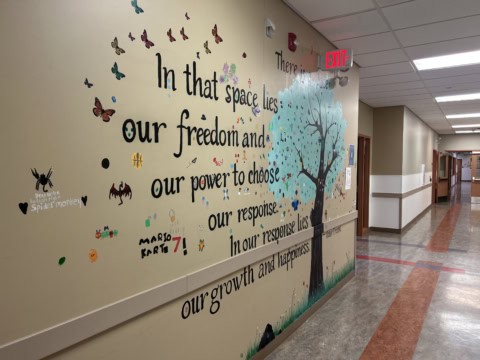 Reflecting CASA House’s wrap-around nature, a patient’s typical day is a mix of school, therapy and other activities focused on building life skills.
Many of the patients who come to CASA House weren’t attending school at all when they arrived. Over time, with the help of therapeutic support, they build up their attendance. Starting with one block a day, followed by two or three, they will eventually be discharged with regular, full-day school attendance – with the ultimate goal of keeping up their attendance at their community school.
School-based programs like CASA House help treat mental health conditions so kids and youth can do better in school, go to school more often and get along better with others.
Building up the kids’ confidence and positive behaviours isn’t limited to school attendance. They also build skills through regular community outings.
“Some of our kids have been isolated… They don’t have friends. But exposing them to those things in the community and building those skills and capacities does help them to be able to do much better back at home,” Shola says.
One of those unique things they do is pet therapy. In addition to cats and dogs, CASA House youth have gotten to spend time with a few flightless fowl.
 “The very cool one that I had at CASA House is the chicken yoga,” Shola recalls. CASA House patients spent time with some chickens in a therapeutic setting. Bonding with a chicken might seem like an unusual choice, but it teaches patience and inner calmness. In a more exotic instance, the kids have gotten to interact with local celebrity penguins, through a partnership between CASA House and the Edmonton Valley Zoo.
“For some of these kids, this is the only opportunity they have to do stuff like that,” Shola reflects.
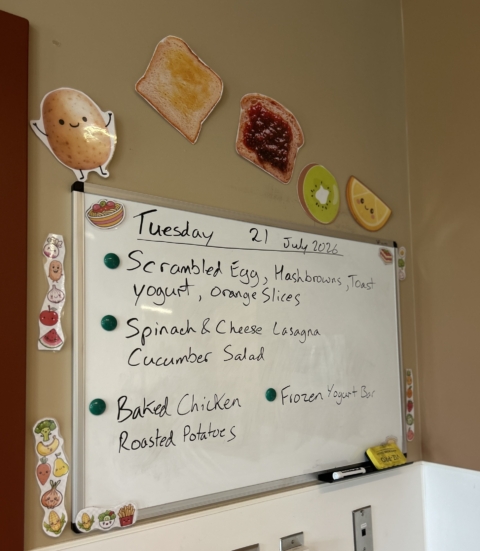
Community outings, meaningful holiday celebrations, recreation equipment and nutritious meals are just some of the things that wouldn’t be possible without donor support.
“[Donors] are giving us what we need to support the patients here and their families,” says Shola. “We want the kids to do well. So, every donation, every dollar counts.”
CASA Mental Health is the only non-profit of its kind in Alberta, providing treatment to the missing middle – treatment that is more intensive than what’s available in home or primary care, but not hospital or emergency services – which isn’t always the best place for a young person or family.
