
Content warning: this article discusses suicidality and shares the story of a suicide survivor.
Katelyn Dahlgren wants to let other kids with mental health challenges know that help is out there.
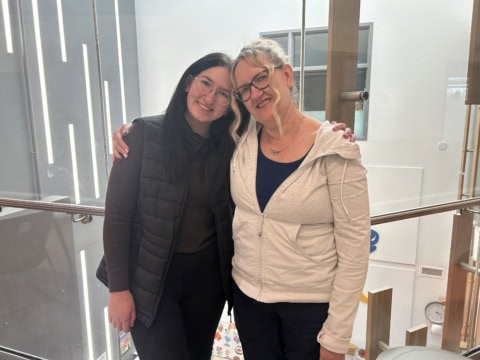
At just 15 years old, she’s 25 credits away from the 100 credits needed to graduate. She has big dreams for the future and wants to use her voice to help others. She plans to become a paramedic.
Three years ago, her family was experiencing what her mom, Angela, describes as a black hole.
“We started to notice changes in her at the start of Grade 8 in 2023,” says Angela. Katelyn seemed distant, secretive and was struggling to maintain friendships. Initially, Katelyn’s family and friends thought it was just typical teenage behaviour.
“In April of that year was her first suicide attempt,” Angela says. Then, over a period of 14 months, Katelyn overdosed 37 times.

During that time, they changed schools, looking for the most supportive environment for Katelyn. In hospital emergency rooms, Katelyn was only treated medically, then released. “They refused to treat her mental health,” Angela says.
Angela and her husband Sheldon sought help from many programs for youth with acute mental health needs and were left frustrated.
“We faced judgement from all types of medical professionals…” says Angela. “No one seemed to care about her or want to help her … our family unit continued to crumble … we felt we could no longer keep her safe.”
Then, in July 2025, they began to feel hopeful: Katelyn was accepted into CASA Mental Health’s CASA House program in Sherwood Park.
“We were at a point in our journey just taking things, not day by day, but minute by minute – just trying to keep our daughter alive one more day until she could go to CASA House,” says Angela.
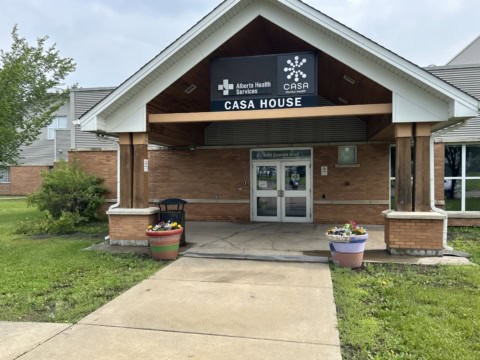 CASA House is a voluntary, live-in program for youth who haven’t responded as expected to previous therapy. It’s the most intensive of CASA’s programs. In fall 2027, CASA Mental Health is expanding its House and Adolescent Day programs to Fort McMurray and Calgary, to reach more youth like Katelyn.
Tanya Kendall, the clinical director who oversees the House program, explains, “CASA House patients arrive with significant clinical complexity. They require intensive, 24-hour support to stabilize their mental health, safety, functioning and treatment needs.”
At the family’s first meeting with CASA staff, Angela thought, “Maybe, just maybe, this program will be different.”
“We were told that the program would not be easy for Katelyn or us, and that all of us would be required to make changes and have to work to be successful and see results,” she says.
Katelyn attended CASA House for three months. While there, she received a diagnosis of ADHD and was treated with medication.
“Halfway through our CASA journey, we began to see changes … her life changed,” says Angela. “Everything changed.”
Katelyn and her parents began to understand her ADHD diagnosis. In the parent group, Angela and Sheldon met other parents who were able to share, empathize and support one another. As a family, they learned new communication skills and how to support Katelyn in her mental health journey.
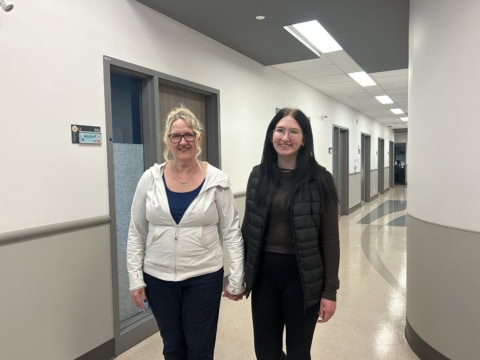
Since completing the CASA House program, Katelyn has transitioned to lower-intensity services at CASA Centre – CASA’s location in the Allendale community in Edmonton. There, she is a patient in the Trauma program. Katelyn receives one-on-one support and she and her parents see a family therapist.
“We continue to have our struggles, but we know that we have CASA’s continued help and support,” says Angela. Whenever Angela speaks about their experience, she emphasizes that mental illness can be chronic and lifelong, and it should be treated like any chronic physical illness. The skills and knowledge the family gained at CASA House are foundational to helping them navigate daily life, but mental illness requires life-long management.
When asked about the outcomes of the CASA House program, Tanya explains that many patients have a similar experience to the Dahlgrens. Even though they leave the program needing lower-intensity services, it doesn’t mean the patient’s needs have disappeared or lessened in complexity.
“Usually, they have reached a point where their needs can be safely managed without the intensity of a 24-hour, live-in environment,” Tanya says. “Patients may continue to require community supports, such as outpatient psychiatry, medication management, community mental health services including individual or family therapy … The goal at CASA House is to help adolescents develop the stability, skills, relationships and supports needed to continue recovery in the community.”
We’ll save the last word for Angela:
“There’s nothing like CASA House out there … I truly believe that if CASA was not there for our family, that my daughter would not be here today.”
CASA Mental Health is the only non-profit of its kind in Alberta, providing treatment to the missing middle – treatment that is more intensive than what’s available in home or primary care, but not hospital or emergency services – which isn’t always the best place for a young person or family. CASA’s effective medical and therapeutic care model is meeting Alberta’s urgent need for timely and accessible mental health treatment, providing hope closer to home for families.
CASA Mental Health is also expanding its House and Adolescent Day programs to Medicine Hat and a new facility in the Edmonton region in 2029. CASA is expanding its circle of care — including its CASA House program — for more Alberta kids, youth and families.
