
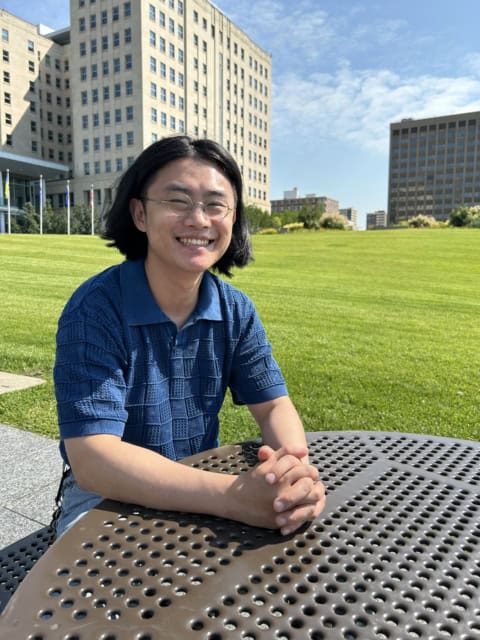
Wanyixiong Hua is reliable, curious, compassionate and charismatic: all the hallmarks of a fantastic volunteer.
In both the clinical stream and at various signature events, you can always find Hua with a smile on his face and a hand to lend. Perhaps he told you about CASA Mental Health’s work at a booth at a community event. You might have received a call from him thanking you for your donation. He’s even been a star on CASA’s social media from time to time.
“Hua is a such a positive force in the CASA volunteer community,” says Breanne Coffill, Manager, Volunteer Resources at CASA.
“Whether he is representing us at community and fundraising engagement events or consistently volunteering to support CASA clinical therapy programs through childminding – there isn’t a time where his commitment to CASA cannot be felt. Thanks, Hua!”
What motivated you to get involved as a volunteer? What attracted you to CASA?
I had been in school for a couple of years studying psychology and cultural mental health related topics. Over time I got to a space where I wanted to see the real impact of the work, and interact with people directly. That’s why I was looking for this kind of role, where I could actively participate in the community, helping people.
Describe your volunteer involvement at CASA, and the programs and events you’ve participated in up to this point?
I have been to a lot of events! I was at the CASA Gala. I was at the McNally Bikeathon where I attended the booth and chatted about destigmatizing mental health. I got to talk with a lot of students with friends who’ve been to CASA – or who’ve been to CASA personally.
Most recently I’ve been involved with the clinical stream, which helps with providing structured activity and promoting emotional regulation to patients.
Out of those what do you enjoy the most?
All the activities I’ve been part of!
CASA has given me the opportunity to be engaged with community and contribute my time to something that helps me see the real positive impact I can make towards my community.
Above all else, what I enjoy the most is the opportunity to build genuine connections with the patients as a part of the clinical volunteer stream.
What is your biggest gain from volunteering with CASA? Is there an achievement or contribution that you’re most proud of?
Something I’m pretty proud of is being able to build a rapport with people of all ages. I’ve learned a lot from CASA staff, where they told me what I would have to do to build rapport with kids. You don’t want to talk to them when you’re standing up because you are too tall. They don’t really perceive you as a peer. They don’t trust you. Coming down to the same eye level, using their voice, constantly coming up with new random play have all helped to build that rapport.
With so many great organizations to volunteer with, why should others choose to spend their time volunteering with CASA?
The work that this type of organization does is crucial in defining the community we’re living in for the next 20 to 30 years. How you’re raised as a kid, how you’ve been treated as a kid will affect how you behave as an adult and how you’ll treat other people.
I think on a fundamental level, CASA Mental Health is a very important component of society, especially for the future.
How do you take care of your mental health?
I feel like the body and soul are connected. Your mental health is connected to your physical health. So, I like to start with my physical health first. One thing I like to do is get physical exercise. If you are moving your body, that demands a good diet. Otherwise you won’t be able to recover as fast as possible. And then you sleep better. If you sleep better, you eat better. Then you are in a better mental space.
For more information on becoming a volunteer like Hua, visit casamentalhealth.org/volunteer.
